Tag Archives: FAMILY LAWYER

Waltons Stores (Interstate) Ltd v Maher [1988] HCA 7 | 19 February 1988

Waltons Stores (Interstate) Ltd v Maher [1988] HCA 7; (1988) 164 CLR 387 (19 February 1988).

http://www.austlii.edu.au/au/cases/cth/HCA/1988/7.html

Maher owned a commercial property at Nowra. Waltons was a national department store. Waltons and Maher entered into negotiations regarding the lease of Maher’s property conditional upon Maher demolishing the existing building and constructing a new one in accordance with Waltons’ requriements.

Waltons provided Maher with a draft lease contract. Maher suggested amendments and indicated they needed to complete the agreement in the next day or so in order to arrange building supplies before Christmas. Maher indicated that he did not want to demolish the building until he knew there was no problem with the lease. The solicitor for Waltons said to Maher that Waltons had informed him that the amendments were acceptable but would obtain formal instructions and inform him by the next day if they did not agree with any of the amendments. The solicitor for Waltons then sent Maher’s solicitor a redrafted lease with the suggested amendments and did not object to the amendments the next day, or at all. Maher then sent Waltons an executed lease by way of exchange and then proceeded with the demolition. A week later, Waltons had concerns about the transaction and, not having exchanged their counterpart of the lease, instructed their solicitor to go slow. Waltons then became aware that the building had been demolished and when the new building was 40% completed advised Maher that they did not wish to proceed with the transaction.

Maher sued Waltons in the Supreme Court of NSW, obtaining an order for specific performance or damages in lieu. An appeal to the NSW Court of Appeal was dismissed, as was an appeal to the High Court of Australia.

Per Mason CJ, Wilson, Brennan and Deane JJJ, Waltons was bound to enter into a lease agreement and estopped from denying an implied promise to complete the contract as it would be unconscionable for Waltons to take a course of inaction that exposed Maher to detriment by acting on a false assumption.

The High Court brought together proprietary and promissory estoppel under the broader principle of equitable estoppel. When a person makes a non-contractual or voluntary promise and knowingly induces the other party to act to his or her detriment in reliance on that promise, that person is precluded from resiling from the promise without avoiding the detriment. The person who makes the promise is liable to either honour the promise or avoid detriment to the other party.

Per Brennan J at 428-9:

“In my opinion, to establish an equitable estoppel, it is necessary for a plaintiff to prove that (1) the plaintiff assumed that a particular legal relationship then existed between the plaintiff and the defendant or expected that a particular legal relationship would exist between them and, in the latter case, that the defendant would not be free to withdraw from the expected legal relationship; (2) the defendant has induced the plaintiff to adopt that assumption or expectation; (3) the plaintiff acts or abstains from acting in reliance on the assumption or expectation; (4) the defendant knew or intended him to do so; (5) the plaintiff’s action or inaction will occasion detriment if the assumption or expectation is not fulfilled; and (6) the defendant has failed to act to avoid that detriment whether by fulfilling the assumption or expectation or otherwise. For the purposes of the second element, a defendant who has not actively induced the plaintiff to adopt an assumption or expectation will nevertheless be held to have done so if the assumption or expectation can be fulfilled only by a transfer of the defendant’s property, a diminution of his rights or an increase in his obligations and he, knowing that the plaintiff’s reliance on the assumption or expectation may cause detriment to the plaintiff if it is not fulfilled, fails to deny to the plaintiff the correctness of the assumption or expectation on which the plaintiff is conducting his affairs.”

Lawyers

Sydney, Australia

1300 00 2088

Medlin v State Government Insurance Commission [1995] HCA 5 | 16 February 1995

ON THIS DAY IN 1995, the High Court of Australia delivered Medlin v State Government Insurance Commission [1995] HCA 5; (1995) 182 CLR 1; (1995) 127 ALR 180 (1995) Aust Torts Reports 81-322 (16 February 1995).

http://www.austlii.edu.au/au/cases/cth/HCA/1995/5.html

Per Deane, Dawson, Toohey and Gaudron JJ said at [6]:

“For the purposes of the law of negligence, the question whether the requisite causal connexion exists between a particular breach of duty and particular loss or damage is essentially one of fact to be resolved, on the probabilities, as a matter of commonsense and experience. And that remains so in a case such as the present where the question of the existence of the requisite causal connexion is complicated by the intervention of some act or decision of the plaintiff …which constitutes a more immediate cause of the loss or damage. … If, in such a case, it can be seen that the necessary causal connexion would exist if the intervening act or decision be disregarded, the question of causation may often be conveniently expressed in terms of whether the intrusion of that act or decision has had the effect of breaking the chain of causation which would otherwise have existed between the breach of duty and the particular loss or damage. The ultimate question must, however, always be whether, notwithstanding the intervention of the subsequent decision, the defendant’s wrongful act or omission is, as between the plaintiff and the defendant and as a matter of commonsense and experience, properly to be seen as having caused the relevant loss or damage. Indeed, in some cases, it may be potentially misleading to pose the question of causation in terms of whether an intervening act or decision has interrupted or broken a chain of causation which would otherwise have existed. An example of such a case is where the negligent act or omission was itself a direct or indirect contributing cause of the intervening act or decision.”

Per McHugh J at [20]:

“However, the ultimate question is whether, as a matter of common sense, the financial loss that the plaintiff has suffered was caused by the plaintiff’s act in resigning his office rather than by the defendant’s negligence.”

Per McHugh J at [23]:

“The plaintiff’s complaints of pain and fatigue, his decreasing confidence in his own abilities, his belief that he was no longer teaching as well as he was before the accident and his inability to find time for research combine to make a strong case for concluding that his early retirement was not unreasonable. A defendant cannot reasonably require a plaintiff to remain in employment for the purpose of reducing the damages that the defendant would otherwise have to pay if to do so would interfere with the plaintiff’s reasonable enjoyment of life. The doctrine of mitigation of loss was not intended to turn injured plaintiffs into economic slaves.”


Lawyers

Sydney, Australia

1300 00 2088

North Sydney Local Court Lawyers

LEGAL HELPDESK LAWYERS is a new generation private legal practice that offers legal guidance to individuals and businesses in Sydney’s Lower North Shore and Northern Beaches.

We provide information, advice and advocacy to those who need – or might need – legal representation in any area of law.

If required, we refer customers to a reliable network of specialist lawyers. We take the guesswork out of finding a good lawyer.

Legal Helpdesk
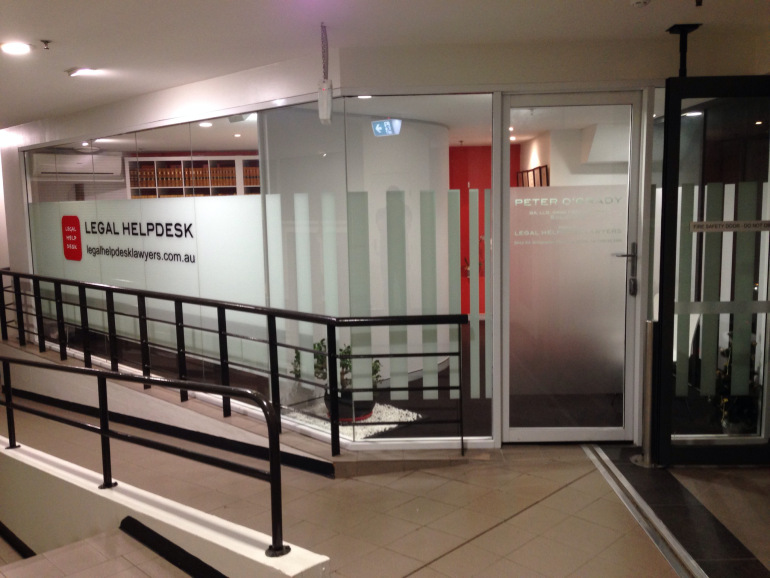
Legal Helpdesk is at Bridgepoint Mosman near the Level 1 footbridge to Fitness First

Our mission is to promote better local access to good legal help.

Confidentiality and privacy is protected by law.

1300 00 2088

Lawyers

SYDNEY, AUSTRALIA

Lawyers

1300 00 2088

Stevens v Brodribb Sawmilling Company Pty Ltd [1986] HCA 1 | 13 February 1986

ON THIS DAY IN 1986, the High Court of Australia delivered Stevens v Brodribb Sawmilling Company Pty Ltd [1986] HCA 1; (1986) 160 CLR 16 (13 February 1986).

http://www.austlii.edu.au/au/cases/cth/HCA/1986/1.html

Per Mason J at 24:

“The first question to determine is whether the relationship between Brodribb and Gray was one of employer and employee or one of principal and independent contractor…A prominent factor in determining the nature of the relationship between a person who engages another to perform work and the person so engaged is the degree of control which the former can exercise over the latter. It has been held, however, that the
importance of control lies not so much in its actual exercise, although clearly that is relevant, as in the right of the employer to exercise it (Zuijs v. Wirth Brothers Pty Ltd [1955] HCA 73; (1955) 93 CLR 561, at p 571;
Federal Commissioner of Taxation v. Barrett [1973] HCA 49; (1973) 129 CLR 395, at p 402; Humberstone v. Northern Timber Mills [1949] HCA 49; (1949) 79 CLR 389). In the last-mentioned case Dixon J. said (at p 404):

“The question is not whether in practice the work was in fact done subject to a direction and control exercised by an actual supervision or whether an actual supervision was possible but whether ultimate authority over the man in the performance of his work resided in the employer so that he was subject to the latter’s order and directions.”

But the existence of control, whilst significant, is not the sole criterion by which to gauge whether a relationship is one of employment. The approach of this Court has been to regard it merely as one of
a number of indicia which must be considered in the determination of that question (Queensland Stations Pty Ltd v. Federal Commissioner of Taxation [1945] HCA 13; (1945) 70 CLR 539, at p 552; Zuijs’ Case;
Federal Commissioner of Taxation v. Barrett, at p 401; Marshall v. Whittaker’s Building Supply Co. [1963] HCA 26; (1963) 109 CLR 210, at p 218). Other relevant matters include, but are not limited to, the mode of
remuneration, the provision and maintenance of equipment, the obligation to work, the hours of work and provision for holidays, the deduction of income tax and the delegation of work by the putative employee.”

Per Wilson and Dawson JJ at 35:

“The classic test for determining whether the relationship of master and servant exists has been one of control, the answer depending upon whether the engagement subjects the person engaged to the command of the person engaging him, not only as to what he shall do in the course of his employment but as to how he shall do it: Performing Right Society, Ld. v. Mitchell and Booker (Palais de Danse), Ld. (1924) 1 KB 762. The modern approach is, however, to have regard to a variety of criteria. This approach is not without its difficulties because not all of the accepted criteria provide a relevant test in all circumstances and none is conclusive. Moreover, the relationship itself remains largely undefined as a legal concept except in terms of the various criteria, the relevance of which may vary according to the circumstances.”

Per Brennan J:

“The entrepreneur’s duty arises simply because he is creating the risk (Sutherland Shire Council v. Heyman [1985] HCA 41; (1985) 59 ALJR 564, at p 587; [1985] HCA 41; 60 ALR 1, at p 42) and his duty is more limited than the duty owed by an employer to an employee. The duty to use reasonable care in organizing an activity does not import a duty to avoid any risk of injury; it imports a duty to use reasonable care to avoid unnecessary risks of injury and to minimize other risks of injury. It does not import a duty to retain control of working systems if it is reasonable to engage the services of independent contractors who are competent themselves to control their system of work without supervision by the entrepreneur. The circumstances may make it necessary for the entrepreneur to retain and exercise a supervisory power or to prescribe the respective areas of responsibility of independent contractors if confusion about those areas involves a risk of injury. But once the activity has been organized and its operation is in the hands of independent contractors, liability for negligence by them within the area of their responsibility is not borne vicariously by the entrepreneur. If there is no failure to take reasonable care in the employment of independent contractors competent to control their own systems of work, or in not retaining a supervisory power or in leaving undefined the contractors’ respective areas of responsibility, the entrepreneur is not liable for damage caused merely by a negligent failure of an independent contractor to adopt or follow a safe system of work either within his area of responsibility or in an area of shared responsibility.”

Lawyers

Sydney, Australia

1300 00 2088

Plaintiff S297-2013 v Minister for Immigration and Border Protection [2015] HCA 3

ON 11 FEBRUARY 2015, the High Court of Australia delivered Plaintiff S297-2013 v Minister for Immigration and Border Protection [2015] HCA 3 (11 February 2015).

http://www.austlii.edu.au/au/cases/cth/HCA/2015/3.html

On 22 June 2014, the High Court of Australia delivered Plaintiff S297-2013 v Minister for Immigration and Border Protection [2014] HCA 24 (20 June 2014), ordering that the Minister determine the plaintiff’s application for a permanent protection visa according to law.

In July 2014, the Minister refused to grant the plaintiff a permanent protection visa on that grounds that he was not satisfied that the grant of such a visa was “in the national interest” because the plaintiff was an unauthorised maritime arrival.

On 11 February 2015, in the most recent case, the High Court held that the Minister’s decision in July 2014 to not grant the visa was not according to law because under the Migration Act 1958 (Cth) the Minister could not refuse such an application just because the plaintiff was an unauthorised maritime arrival.

Lawyers 1300 00 2088

Lavin v Toppi [2015] HCA 4

ON 11 FEBRUARY 2015, the High Court of Australia delivered Lavin v Toppi [2015] HCA 4 (11 February 2015).

http://www.austlii.edu.au/au/cases/cth/HCA/2015/4.html

The appellants and respondents were sureties who had guaranteed a consolidated loan with the National Australia Bank.

In 2010, NAB demanded repayment of the balance of the loan debts and brought proceedings against all of the guarantors. In settlement of proceedings against the appellants, NAB covenanted not to sue them for the guaranteed debt in return for the payment of a minor portion of the debt. The respondents then paid the disproportionately high balance of the debt and then brought proceedings against the appellants seeking the recovery of the amount they paid to NAB in excess of their proportionate share.

The appellants resisted the appellants claim, arguing that the appellants and respondents no longer had “coordinate liabilities” by reason of the debt only being enforceable against the respondents due to NAB’s covenant not to sue the appellants.

The NSW Supreme Court found in favour of the respondents and the Court of Appeal dismissed an appeal, holding that the respondents could still recover from the appellants because the covenant not to sue did not alter the liabilities between the appellants and respondents under the guarantee and therefore they still had “coordinate liabilities”.

The High Court dismissed an appeal by the appellants, holding the Court of Appeal to be correct in holding (1) that the covenant not to sue did not extinguish the appellants’ liability under the guarantee and (2) that the respondents had an equitable entitlement to contribution which could not be defeated by the covenant not to sue.

Lawyers 1300 00 2088

Baltic Shipping Company v Dillon [1993] HCA 4 | 10 February 1993

ON THIS DAY IN 1993, the High Court of Australia delivered Baltic Shipping Company v Dillon [1993] HCA 4; (1993) 176 CLR 344; (1993) 111 ALR 289; (1993) 67 ALJR 228 (10 February 1993).

http://www.austlii.edu.au/au/cases/cth/HCA/1993/4.html

As an exception to the rule that damages are not available for mental distress and disappointment arising from a breach of contract, such damages may be awarded if the contract in question contemplated the delivery of enjoyment, relaxation or peace of mind.

Lawyers 1300 00 2088

British American Tobacco Australia Services Limited v Laurie [2011] HCA 2 | 9 February 2011

ON 9 FEBRUARY 2011, the High Court of Australia delivered British American Tobacco Australia Services Limited v Laurie [2011] HCA 2 (9 February 2011).

http://www.austlii.edu.au/au/cases/cth/HCA/2011/2.html

Lawyers

Sydney, Australia

1300 00 2088

Kirk v Industrial Relations Commission; Kirk Group Holdings Pty Ltd v WorkCover Authority of New South Wales (Inspector Childs) [2010] HCA 1 | 3 FEBRUARY 2010

ON THIS DAY IN 2010, the High Court of Australia delivered Kirk v Industrial Relations Commission; Kirk Group Holdings Pty Ltd v WorkCover Authority of New South Wales (Inspector Childs) [2010] HCA 1 (3 February 2010).

http://www.austlii.edu.au/au/cases/cth/HCA/2010/1.html

Kirk was charged for offences under the Occupational Health and Safety Act 1983 (NSW). The statement of offence did not identify the acts or omissions that constituted the alleged offences.

The charges were heard by the NSW Industrial Court. During the hearing the prosecution called Kirk as a witness for the prosecution.

Kirk was convicted and sentenced.

Kirk appealed to the NSW Court of Appeal seeking an order in the nature of certiorari on the grounds that there was a jurisdictional error. Kirk argued that the Industrial Court exceeded its jurisdiction in two ways: (1) the statement of offence did not identify the acts of omissions that constituted the alleged offences, nor the measures available to address the risks, so the defendant was denied an opportunity to properly defend the charges and (2) that under s17(2) of the Evidence Act 1995 (NSW), a defendant is not competent to give evidence for the prosecution and the trial was therefore conducted otherwise than in accordance with the laws of evidence. The NSW Court of Appeal refused to quash the convictions and sentences on the grounds that s179 of the Industrial Relations Act 1996 (NSW) prohibits an appeal against a review, quashing or calling into question a decision of the Industrial Court.

The High Court allowed the appeal, set aside the Court of Appeal’s decision and quashed the convictions and sentences. In overturning the Court of Appeal, High Court held that (1) the a “decision” does not include a decision made by the Industrial Court outside of their jurisdiction and (2) it was beyond the power of the State legislature to limit the power of a State Supreme Court to grant relief to correct jurisdictional errors made by courts and tribunals of limited jurisdiction.

Lawyers 1300 00 2088

Liquor (Amendment) Act 1954 (NSW)

ON THIS DAY IN 1955, the “six o’clock swill” was abolished by the NSW Liquor (Amendment) Act 1954.

Click to access la1954n50214.pdf

Lawyers

Sydney, Australia

1300 00 2088