All posts by Legal Helpdesk Lawyers

Solicitor of the Supreme Court of NSW, Federal Court and High Court of Australia. Public Notary in the State of New South Wales.

National Law Week 2015

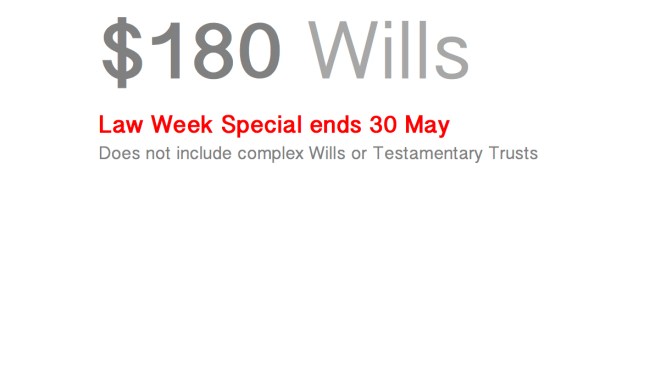
NATIONAL LAW WEEK 11 to 15 May 2015 starts tomorrow.     To mark the event, Legal Helpdesk Lawyers is charging only $180 for Wills until the end of the month.

Law Week promotes public understanding of law and its role in society.

For more information about Law Week, visit http://www.lawweek.com.au.

Lawyers

1300 00 2088

Negligence – Reasonably foreseeable – Personal injury

Bolton v Stone [1951] AC 850; [1951] 1 All ER 1078; [1951] UKHL 2 (10 May 1951).

http://www.bailii.org/uk/cases/UKHL/1951/2.html

Liability does not extend to damage caused by a certain act or omission unless the possibility of causing the damage was reasonably foreseeable at the time.

The damage is not reasonably foreseeable if the likelihood of it happening involves a risk so small that a reasonable person would feel justified in disregarding it.


Lawyers

1300 00 2088


Uelese v Minister for Immigration and Border Protection [2015] HCA 15

ON 6 MAY 2015, the High Court of Australia delivered Uelese v Minister for Immigration and Border Protection [2015] HCA 15 (6 May 2015).

“Migration and citizenship – Visa cancellation – Character test – Administrative Appeals Tribunal – Migration Act 1958 (Cth), s 500(6H) precludes Tribunal from having regard to information presented orally in support of a person’s case unless provided in written statement to Minister two days before Tribunal holds a hearing – Information arose regarding children during cross-examination of witness called on behalf of appellant – Tribunal required to consider best interests of minor children in Australia – Whether Tribunal erred in its application of s 500(6H) by not considering that information – Relevance of whether information could reasonably have been anticipated by appellant.

Migration and citizenship – Visa cancellation – Character test – Administrative Appeals Tribunal – Whether Migration Act 1958 (Cth), s 500(6H) precludes Tribunal from adjourning hearing so that notice requirements may be met – Whether day on which Tribunal “holds a hearing” includes day on which hearing resumes.

Words and phrases – “holds a hearing”, “information presented orally in support of the person’s case”.

Migration Act 1958 (Cth), ss 499, 500(6H), 500(6L), 501.
Administrative Appeals Tribunal Act 1975 (Cth), ss 33, 40(1)(c).”

http://www.austlii.edu.au/au/cases/cth/HCA/2015/15.html

Lawyers

1300 00 2088

Lindsay v The Queen [2015] HCA 16

ON 6 MAY 2015, the High Court of Australia delivered Lindsay v The Queen [2015] HCA 16 (6 May 2015).

“Criminal law – Murder – Defences – Provocation – Where male Caucasian deceased made sexual advances towards male Aboriginal appellant at appellant’s home in presence of appellant’s de facto wife and family – Where open to jury to find that appellant killed deceased having lost self-control following advances – Where provocation left to jury at trial and appellant convicted of murder – Where Court of Criminal Appeal (“CCA”) dismissed appeal against conviction because it concluded provocation should not have been left to jury as evidence, taken at highest, could not satisfy objective limb of provocation – Whether CCA erred in so concluding – Relevance of contemporary attitudes to sexual relations.

Criminal law – Appeal – Appeal against conviction – Application of proviso – CCA dismissed appeal by applying proviso to s 353(1) of Criminal Law Consolidation Act 1935 (SA) – Where CCA not invited to apply proviso by prosecution – Whether CCA erred in invoking and applying proviso of its own motion.

Words and phrases – “minimum powers of self-control”, “ordinary person”, “partial defence”.

Criminal Law Consolidation Act 1935 (SA), s 353(1).”

http://www.austlii.edu.au/au/cases/cth/HCA/2015/16.html

The High Court of Australia allowed an appeal against an decision of the South Australian Court of Criminal Appeal, quashing the appellant’s conviction for murder and ordering a retrial.

Lawyers

1300 00 2088

Children – Intellectual disability – Sterilization – Family Law

Department of Health & Community Services v JWB & SMB (“Marion’s Case”) [1992] HCA 15; (1992) 175 CLR 218 (6 May 1992).

“Children – Intellectual disability – Sterilization – Power of parents to consent – Assault – Parens patriae jurisdiction of court – Criminal Code Act 1983 (N.T.), ss 1, 26, 181, 187 188.

Family Law (Cth) – Family Court – Jurisdiction – Welfare – Parens patriae – Intellectually disabled child – Sterilization – Power of Court to authorize operation – Effect of authorization on criminal law – Family Law Act 1975 (Cth), ss. 63, 64, 64E – Criminal Code Act 1983 (N.T.), ss 1, 26, 181, 187, 188.”

The court held that the parents of a 14 year old mentally retarded girl from the Northern Territory could not lawfully authorize a sterilization procedure on their child without an order of a court.

The court held that the Family Court of Australia has the jurisdiction  to authorize the carrying out of a sterilization procedure but could not approve consent being given to the parents unless the court authorizes the procedure.

Whilst parents or guardians may authorize or consent to the carrying out of a therapeutic treatment of their child, they have no such power regarding non-therapeutic treatment.

Sterilization of an intellectuallly disabled minor falls outside of the ordinary scope of parenal powers if the procedure is not obviously necessary.

Children have the right to personal integrity under domestic and international law. Procedures, such as sterilization, are “invasive, irreversible and major surgery”. It is up to the court, not the parents or guardians, to decide the appropriate circumstances that are in the best interests of the child.

http://www.austlii.edu.au/au/cases/cth/HCA/1992/15.html

Lawyers

1300 00 2088

Constitutional Law (Cth) – Freedom of interstate trade and commerce – Prohibition by State law of sale of undersize crayfish

Cole v Whitfield (“Tasmanian Lobster case”) [1988] HCA 18; (1988) 165 CLR 360; (1988) 78 ALR 42; (1988) 62 ALJR 303 (2 May 1988).

“Constitutional Law (Cth) – Freedom of interstate trade and commerce – Prohibition by State law of sale of undersize crayfish – Application to crayfish brought for sale from another State – The Constitution (63 & 64 Vict. c. 12), s. 92 – Sea Fisheries Regulations 1962 (Tas.), reg. 31(1) (d).”

http://www.austlii.edu.au/au/cases/cth/HCA/1988/18.html

A Tasmanian law that prohibited the possession of undersized lobsters imported from South Australia was upheld as not infringing the free trade provisions of s92 of the Constitution as it was not discriminatory in a protectionist sense.

Constitutional Law (Cth) – Freedom of interstate trade and commerce – Prohibition by State law of sale of undersize crayfish

Cole v Whitfield (“Tasmanian Lobster case”) [1988] HCA 18; (1988) 165 CLR 360; (1988) 78 ALR 42; (1988) 62 ALJR 303 (2 May 1988).

“Constitutional Law (Cth) – Freedom of interstate trade and commerce – Prohibition by State law of sale of undersize crayfish – Application to crayfish brought for sale from another State – The Constitution (63 & 64 Vict. c. 12), s. 92 – Sea Fisheries Regulations 1962 (Tas.), reg. 31(1) (d).”

http://www.austlii.edu.au/au/cases/cth/HCA/1988/18.html

A Tasmanian law that prohibited the possession of undersized lobsters imported from South Australia was upheld as not infringing the free trade provisions of s92 of the Constitution as it was not discriminatory in a protectionist sense.

Damages – negligence – personal injuries

Cullen v Trappell [1980] HCA 10; (1980) 146 CLR 1 (1 May 1980).

“Damages – Negligence – Personal injuries – Effect of taxation liability on quantum of damages – Whether damages should be reduced by tax plaintiff would have paid in respect of earnings if he had not been injured – Gourley principle.
Practice (N.S.W.) – Judgment – Interest – Damages for personal injuries – Damages for economic loss up to date of judgment – Damages for other than economic loss – Discretion – Supreme Court Act, 1970 (N.S.W.), s. 94 (1).”

http://www.austlii.edu.au/au/cases/cth/HCA/1980/10.html

The court overruled the earlier High Court decision of Atlas Tiles Ltd v Briers (1978) 144 CLR 202 and affirmed the rule in British Transport Commission v Gourley [1956] AC 185.

Damages are to compensate the plaintiff for the loss suffered, no more or no less. If the damages are taxable income, allowance should be made for this by an award of the gross sum.  If the damages are not taxable, the award should be reduced by any tax the plaintiff would have been required to pay. If the plaintiff is entitled to a tax deduction as a result of the loss, an allowance should be made in the award.

In a claim for personal injuries damages, a court must assess the plaintiff’s pre-injury earning capacity with regards to their net income after tax.  An assessment involving gross income would result in over-compensation.

Interest on past continuing losses is not to be paid at the full rate for the whole period as this would lead to over-compensation. Instead, interest is to be paid at half the rate over the full period or at the full rate over half the period so as to take into account the gradual way in which interest accrues. The awarding of interest is a discretionary matter that must be approached in a “broad and practical way”.


Lawyers

1300 00 2088

Negligence – Duty of care – Breach of duty – Foreseeability of risk of injury – Likelihood of harm occurring – Personal injury

Wyong Shire Council v Shirt [1980] HCA 12; (1980) 146 CLR 40 (1 May 1980).

“Negligence – Duty of care – Breach of duty – Foreseeability of risk of injury – Likelihood of harm occurring – Erection of sign “deep water” in vicinity of shallow water – Whether foreseeable that inexperienced water-skier would fall and suffer injury.”

http://www.austlii.edu.au/au/cases/cth/HCA/1980/12.html

Mason J at p48 expressed the “risk calculus”, that when deciding on a breach of duty of care, the court must not only determine a foreseeable risk but it must also determine a reasonable man’s response by “consideration of the magnitude of the risk and the degree of probability of its occurrence, along with the expense, difficulty and inconvenience of taking alleviating action and any other conflicting responsibilities which the defendant may have”.

Lawyers

Sydney, Australia

1300 00 2088

Contract for sale of land – Refusal by purchaser to complete – Anticipatory breach – Specific performance – Recision – Damages

Ogle v Comboyuro Investments Pty Ltd [1976] HCA 21; (1976) 136 CLR 444 (30 April 1976).

“Vendor and Purchaser – Sale of land – Contract of sale – Refusal by purchaser to complete – Anticipatory breach – Suit for specific performance by vendor – Continued refusal by purchaser to complete – Whether vendor entitled to rescind and claim damages.”

A contract may be rescinded by a vendor for repudiation whilst an action for specific performance is on foot if the purchaser refuses to complete and acts as though it intends to be no longer bound by the contract.

Lawyers

Sydney, Australia

1300 00 2088